
The Transmutation Game
An Alchemical Sequence (§183-189)

(§1-7; §8-14; §15-21; §22-28; §29-35, §36-42; §43-49; §50-56; §57-63, §64-70; §71-77; §78-84, §85-91, §92-98, §99-105; §106-112; §113-119, §120-126; §127-133; §134-140, §141-147; §148-154; §155-161; §162-168, §169-175; §176-182)
§183. Philosopher’s Stone
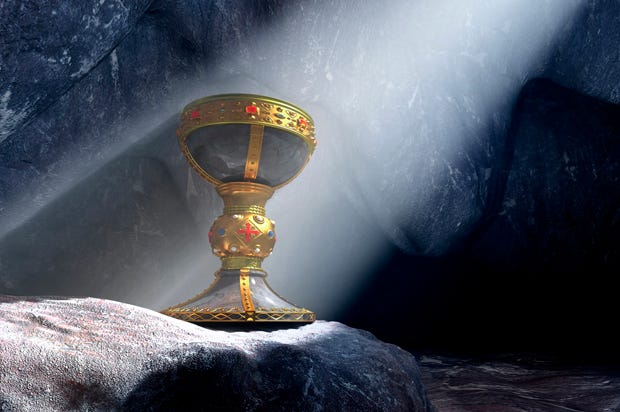
A phil-o-soph-er, as a matter of etymology, would have to be a lover of Sophia—although one could be forgiven for not realizing that, given the sordid spectral abstractions that pass for most of what’s called philosophy in these latter days. The prize sought by all alchemists of yore was the Philosopher’s Stone, an enigmatic substance that can absorb the impurities and defects of any object and raise it to its highest metaphysical fulfillment. The paradigmatic image of the alchemical work involves the transmutation of lead into gold—the dullest metal into the most radiant, the death of Saturn into the life of the Sun. By way of easy inference, this principle finds its genesis and fulfillment at Calvary, as it becomes clear that the blood of the living God was what the alchemists had sought all along, an empirical-Empyrical substance that resurrects the lead-dead and turns the entire Earth into the golden Holy Grail. And so it is that we find ourselves arriving at the recognition of Jesus as the original Alchemist, and the Gospel as the underlying alchemical protocol. All philosophy worth its salt is a pursuit of the Holy Wisdom who can birth the hell-raising Messiah.
§184. The Blackening
It always has to get worse before it gets better: the Work begins with the nigredo, the blackening. When the Apostle was struck down blind upon that Damascus road, he lost all that he had ever known. Just as flowers cannot bloom when the plant has been choked by weeds, the life of what’s bright requires the death of what’s evil. We think here of one of Christ’s more seemingly bizarre gestures, the curse against the barren fig tree: or, more accurately, a mere revelation of the curse that any creature has already brought against itself by refusing to give life in its due season. And so it will be for us as well, if we fail to find the rhythm and the song. The day will come when all our human instincts and desires ring in perfect celestial resonance, and no mere thought will be allowed to interfere in the syzygy of spirit and life. But in the meanwhile, we should be on guard against romanticizing the black oblivion of permanent existential immaturity, the death of spirit’s forward motion. To be in Hell is bad, but to not know it is worse. And facing such a prospect, melancholia often emerges as the blessed gate to spirit itself, if we have the courage to allow this dark angel to kill what can be killed, so that we may discover what cannot die.
§185. Universal Despair
It is strange to understand that, on the balance, people must be much more unhappy than they commonly appear. Between our own callous lack of attentiveness as well as others’ impetus to conceal their problems and present us with the facades of their best social-media selves, it is something of a miracle that any of us manage to ever make actual contact with each other at all. But there’s a deeper level to the problem as well. There is a type of thinking that mistakes the simple pleasure of sensory immediacy for salvation itself, and basic animal health for everlasting life, and dumb chthonic desire for pneumatic intuition. But a fatal confusion dwells here, a universal despair lurking just a centimeter beneath the patina of good-times bonhomie. When the Lord instructs us to be as children, He means for us to grow childlike and not to merely remain childish; to enter into a second innocence, as an animal raised to a higher exponent, instinct in harmonious chordal fusion with spirit and reason. We seek an end-state where the pain of spectral reflection has been abolished as a result of thought itself having become superfluous, superceded by an immediate noetic instinct that always wins in a contest of inner wills and no longer finds it hard to be good.
§186. The Whitening
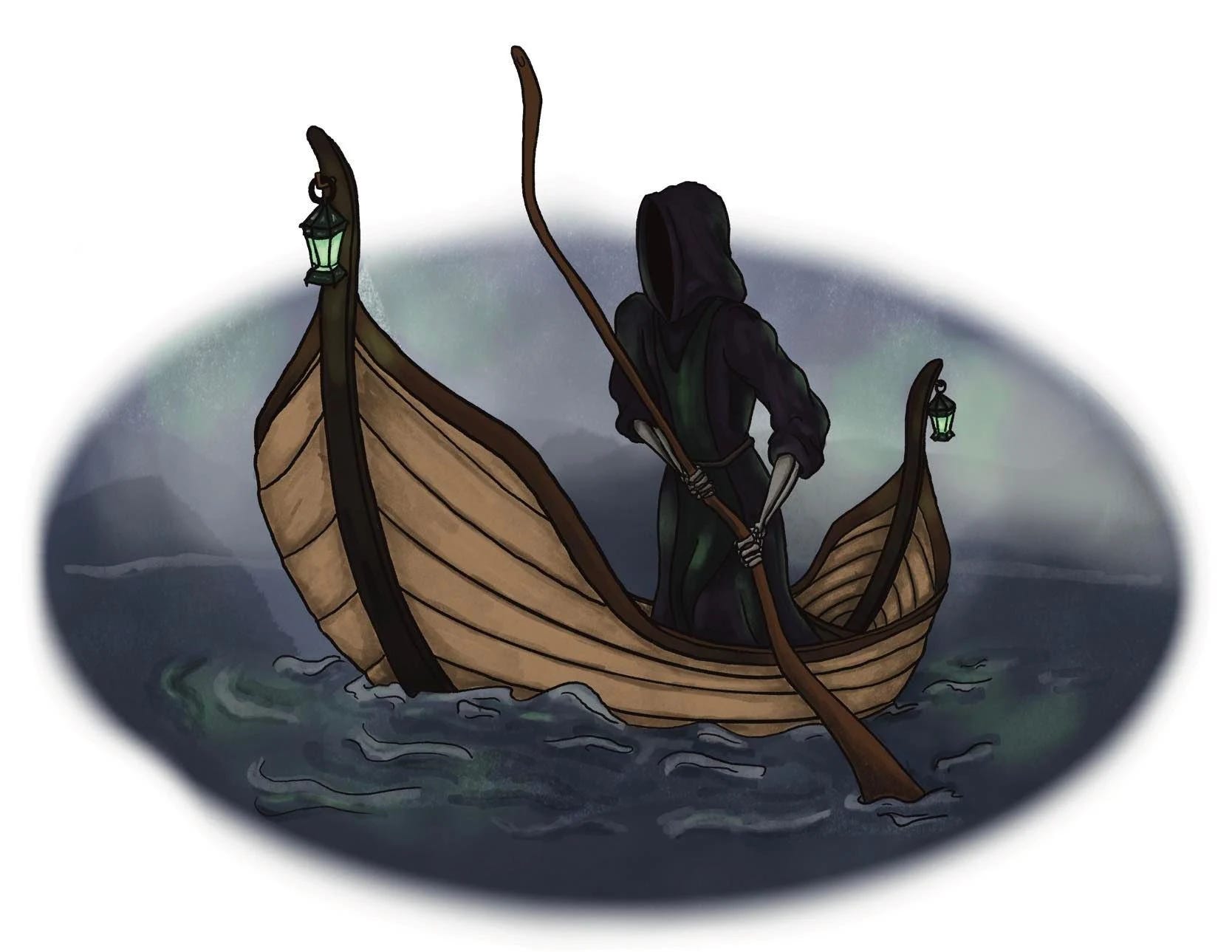
There is a River that we must cross at the edge of the next life, a River that feels like warm milk to the harmonious but molten metal to the degenerate; it is the same objective River, subjectively experienced differently by two different kinds of people. After the death of nigredo comes the purification of albedo, the whitening. There is no “punishment” here; only the simple fact that things are going to get hotter and intensified in the next life, and that whatever within us can’t take the heat—that dross will have to burn. Those who identify with the low-grade trash within themselves will thus necessarily experience annihilation, whereas those who wish to be free of said dead weight will experience liberation: and all while the River itself is totally indifferent and rolls evenly upon the wicked and righteous alike. What the Apostle once found to be evil enough to deserve persecution, he later found to be a good worth dying for—not because the thing itself had changed in any way whatsoever, but rather because he himself was no longer the same at all. People surely can change, then; they must. We’ll either change voluntarily now or against our wills later.
§187. Redeemed Desire
We sense a certain cowardice in the ascetic, perhaps not all that different from what we see in a teetotaling alcoholic: it has to do with the subtle concession that their desires are stronger than their spirits, such that only in fleeing altogether is there hope of safety if not freedom. Booze to the alcoholic is understood as a force of nature, so powerful that it will drown him dead if he even touches one drop of it. Is this how a celibate monk understands sexual desire?—and if so, then isn’t he rather more disordered than most normal mammals, even as he’s not wrong to recognize the power of the thing? All of man’s drives were created by the Lord as good, oriented toward their proper and harmonious objects: hunger to food, imagination to life, anger to defense, sex to woman, and love in every direction. All desire is rooted in presence, but then it grows twisted and perverse and spectral, as we demand to have it all on our own terms at the levels of both society and individual, alienated from the Real. The alchemical objective, at any rate, is the redemption and restoration of all desires to their proper stations in the Song—and not the pursuit of a deafening silence that is tantamount to a confession that the Enemy has won.
§188. The Reddening
The Apostle found his triumph in being able to say, “It is not I, but Christ who lives in me.” This is the rubedo, the reddening, the new life that erupts within the heart like a geyser of blood. It is worth reviewing what exactly had to happen to this man before he was able to arrive at this place. First his entire psychical ego identity to that point was destroyed, to the point that he temporarily lost his physical sight. Then there was the long and harrowing process of tossing out all of what he had once thought he’d known, doing a proper 180 within his own heart—and becoming continually persecuted himself in the process, just as he had once sought to harm others. And finally, when there was little to nothing left of what he once was, this was the point at which he could claim the crown of thorns, having become empty enough of himself to become an avatar of the Holy Ghost, the indwelling spirit of Christ. Red life only blooms from white bones in the black grave, for much of what we usually wish to protect is already dead, and the detritus must be cleared to make way: such is the Law at every level of the Real, from God’s heart to ours.
§189. Immortal Vision
Even as our vision is rooted in the glory of the flesh, a simple factual point gives us pause: namely, that at some point in the human life arc, our clay will begin to irreparably decay, and there is only ever one final station for this train. (And sickness and suffering too often hasten that already-unnatural end.) We are obliged to imagine, however, that the problem is less with the objective reality of flesh than with our own subjective psychical vision. We live, after all, in a world where a caterpillar weaves a little funeral shroud around itself and hangs from a leaf, proceeds to digest itself into elemental goo, and then emerges out of its makeshift tomb with a radiant winged splendor that no one could have inferred from the initial phase of development. Suffice it to say, we inhabit a very strange place, where modern logic has nothing at all to say in the face of the perennial wisdom of faerie tales. We expect that death itself will turn out to be a sort of misunderstanding or hallucination, and the grave only a chrysalis; and that what seems to be the endless sleep of life is only the penultimate transmutation, the endgame of which is the awakening into immortal vision.
Hehe excuse me for always coming with weird comments and questions, but it's for that reason I use this facebook-alt.
"We’ll either change voluntarily now or against our wills later." what if "all of creation is groaning in wait for the revelation of the sons of God" is a reference to this? If the we is not only us, but includes as well the densest pieces of creation, once all spirit but now fused together with the only freedom left observing the rest of us?
great essay.
it reminded me of Nikos Kazantzakis’ “The Last Temptation Of Christ” where he talks about the eternal struggle to turn flesh into spirit.
Christ as Divine Alchemy.